About
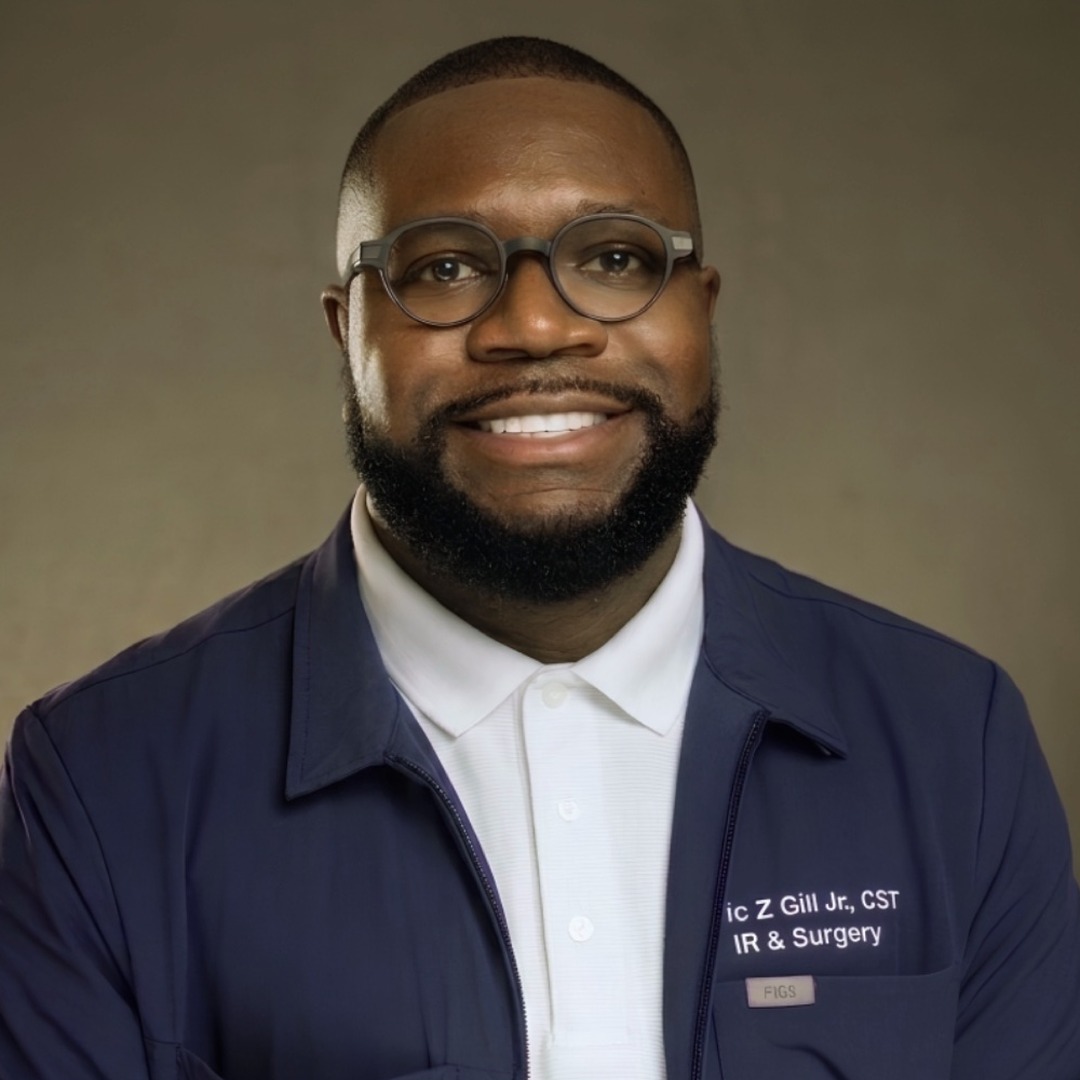
Eric Gill Jr., CST
Clinical Science Liaison — Varian · Siemens Healthineers
Interventional Radiology & Radiation Oncology
I work at the intersection of interventional radiology, radiation oncology, and the technology that serves both — translating between the teams who build clinical tools and the teams who depend on them at the table.
Connect on LinkedIn What I doAt a Glance
What Colleagues Say
“Thank you for all your help with the new hire training. I know the New Hire greatly benefited from your experience in the field and the passion you have for our technology.”
J.B. — Clinical Specialist Manager
“And again thank you for everything in the training. Already started on getting that folder together with the material you sent over. It’s really gonna come in handy out in the field.”
R.G. — Clinical Science Liaison
What I Do
Bridging clinical practice and the technology behind it
As a Clinical Science Liaison with Varian / Siemens Healthineers, my job sits between two worlds that do not always speak the same language: the clinicians working a case in the procedure room or planning a treatment, and the industry teams designing the imaging, guidance, and oncology platforms they rely on.
My role is to make that translation accurate in both directions — carrying real clinical workflow, constraints, and evidence questions back to the teams building the tools, and helping clinical teams understand what a technology can genuinely do, where its limits are, and what the evidence actually supports before it is trusted with a patient.
Precision isn’t a goal in the procedure room. It’s the job description.
Clinical Foundation
Formed in the operating room
My foundation is the operating room. As a Certified Surgical Technologist in interventional radiology and surgery, I learned care from inside the sterile field — where workflow is not an abstraction, timing matters, and a tool that fails under pressure fails a patient, not just a process.
That background shapes everything I do now: how I read evidence, how I judge whether a workflow will survive a real case load, and what I expect from clinical technology before it ever reaches a patient.
Technical Depth
Fluent in technical, as well as clinical
Before healthcare, I built a career in IT — CompTIA Security+, CCNP, and AWS. That training never left my work; it changed how I evaluate the platforms modern imaging and oncology depend on.
Today’s procedure rooms and treatment-planning systems run on networks, data, and software. I can speak to the clinical need and the technical reality in the same conversation — including the data-security questions these platforms have to answer before they earn a place in care.
Professional Interests
What I pay attention to
Evidence appraisal in radiation oncology
Reading studies the way a clinician has to — what was actually shown, in which patients, and whether it changes what happens at the console or the table.
Image-guided therapy
How imaging, guidance, and intervention come together in IR — and how better guidance changes decisions in the middle of a case, not just before it.
Treatment-planning quality & safety culture
Quality in planning is a culture, not a checklist. I’m interested in the habits, checks, and team norms that catch errors before a patient ever feels them.
Clinical technology adoption
How new technology earns — or fails to earn — a place in the procedure room. Adoption that ignores workflow, training, and trust rarely lasts.
Open To
Conversations I’m glad to have
If you work in interventional radiology, radiation oncology, imaging, or the technology behind them, these are the conversations I most enjoy — reach out on LinkedIn and start one.
Peer exchange on evidence
Trial results, guideline changes, and what they actually mean at the table — in IR and radiation oncology.
Clinical feedback on technology
Workflow reality from the procedure room for teams building or evaluating imaging, guidance, and planning platforms.
Journal clubs & case reviews
Structured evidence discussion with clinical teams — reading studies the way the people who act on them have to.
Quality & safety conversations
Planning checks, count and timeout culture, and how new technology earns adoption that actually sticks.
Conversations are in a personal, professional capacity. Views are my own and do not represent my employer.
Selected Notes
Evidence in practice
Short notes where I work through recent evidence and hard-won OR lessons. Three recent ones:
A New Standard for Brain Mets
Alliance A071801 — the first randomized phase 3 trial comparing single-fraction vs. fractionated radiosurgery after resection of a large brain metastasis.
The Myth of Bigger Fields
Five randomized trials challenge a long-held assumption about whole-pelvic radiotherapy in high-risk prostate cancer.
What the OR Knows That the Clinic Forgot
Why the surgical count is more than a checklist — and what oncology teams can learn from it.
Connect
The best way to reach me is LinkedIn
I’m glad to connect with clinicians, imaging and oncology professionals, and industry colleagues working in interventional radiology, radiation oncology, and clinical technology. You’ll find my full background, experience, and current role there.
linkedin.com/in/ericgilljr Download one-page profile (PDF)Researcher identifier (ORCID): 0009-0007-0720-2245